Photography Tips for Capturing the Beauty of the Desert
The Sahara Desert is one of the most photogenic landscapes on Earth. Endless golden dunes, dramatic light, ancient kasbahs, camel caravans, and star-filled skies create unforgettable scenes for photographers of all levels. Whether you’re using a professional camera or simply your smartphone, knowing how to work with desert light, colors, and conditions will help you capture truly stunning images.
In this guide, we share practical photography tips to help you make the most of your Sahara Desert adventure and return home with breathtaking photos.

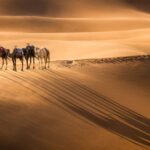
Camels resting peacefully in the vast golden dunes of the Moroccan Sahara.
1. Understand the Power of Desert Light
Light is everything in desert photography. The Sahara’s open landscape allows sunlight to shape the dunes in dramatic ways.
Best times to shoot:
- Sunrise: Soft light, long shadows, calm atmosphere
- Golden hour (before sunset): Warm tones and textured dunes
- Blue hour: Subtle colors and peaceful moods
- Night: Ideal for astrophotography and campfire scenes
Avoid shooting during midday when the light is harsh and shadows are flat unless you are focusing on minimalist compositions.
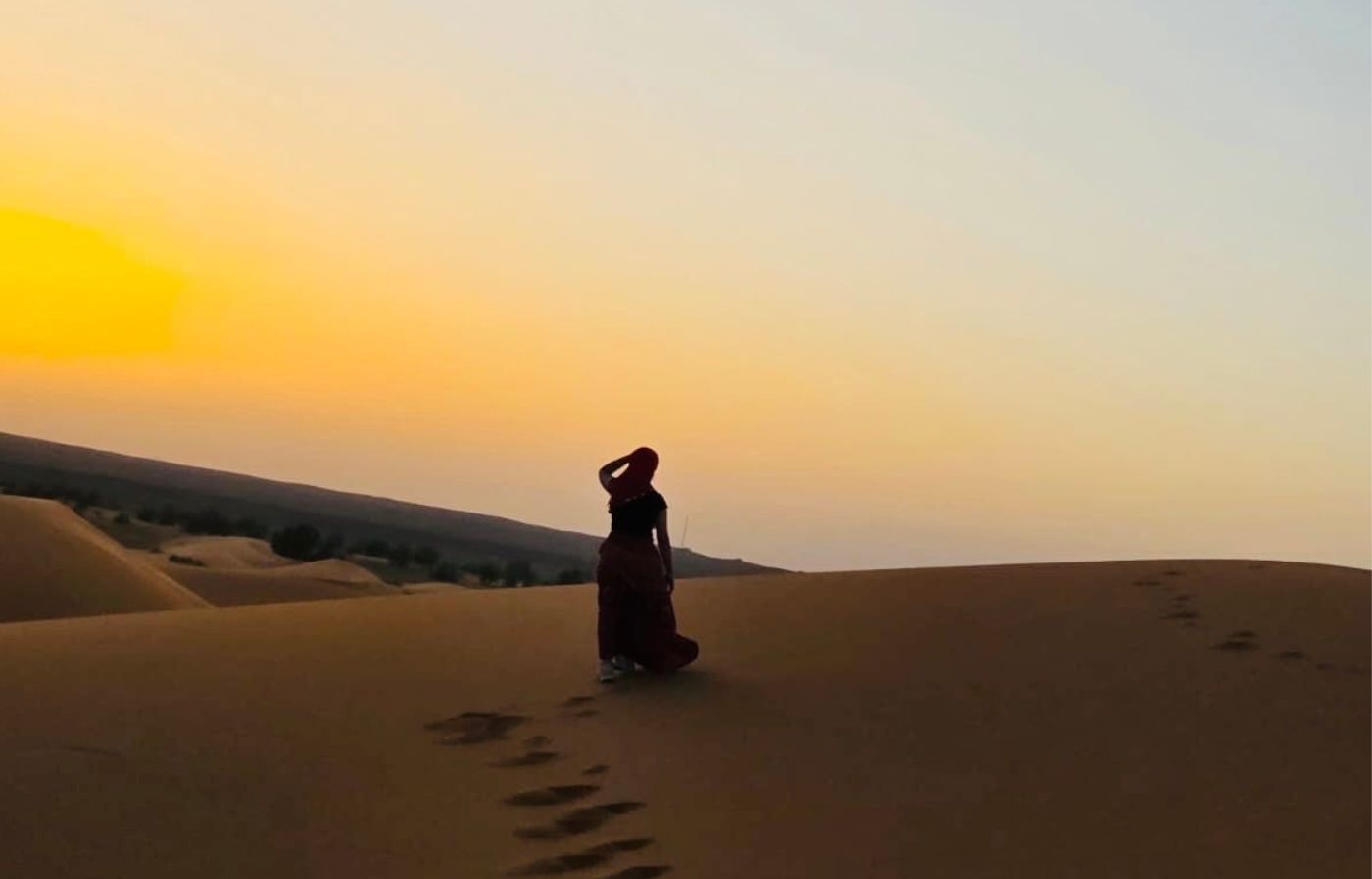
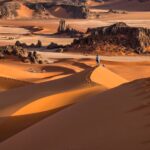
A woman walks across the Merzouga sand dunes during a peaceful sunset in the Sahara Desert.
2. Use Shadows to Create Depth and Texture
Sand dunes are all about lines and patterns. Shadows help define their shape and scale.
Tips:
- Shoot from the side of dunes rather than head-on
- Look for ripples in the sand created by the wind
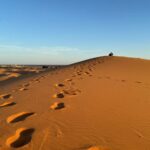
- Use footprints, camel tracks, or ridgelines as leading lines
Early morning and late afternoon are best for capturing these textures.
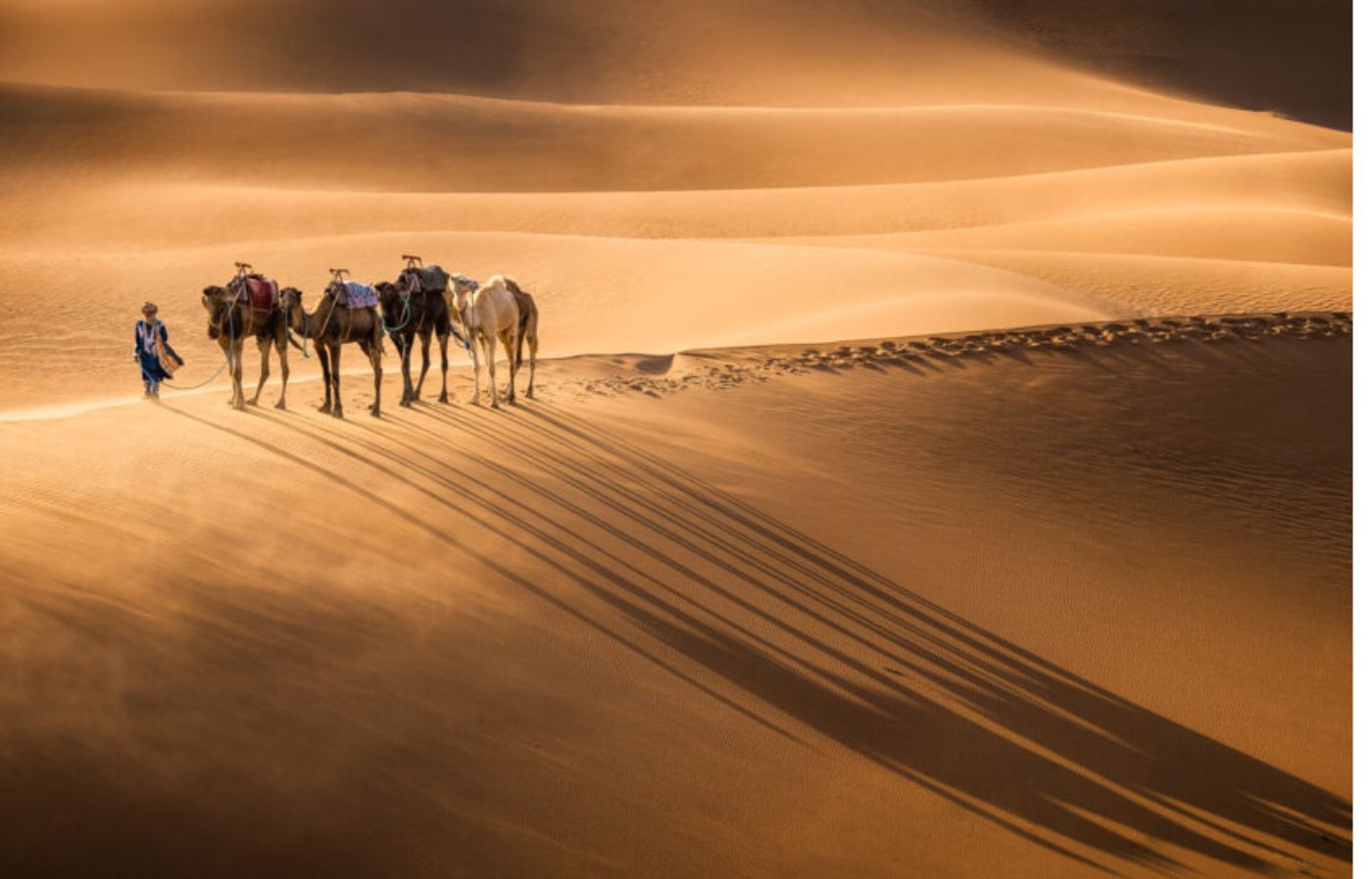
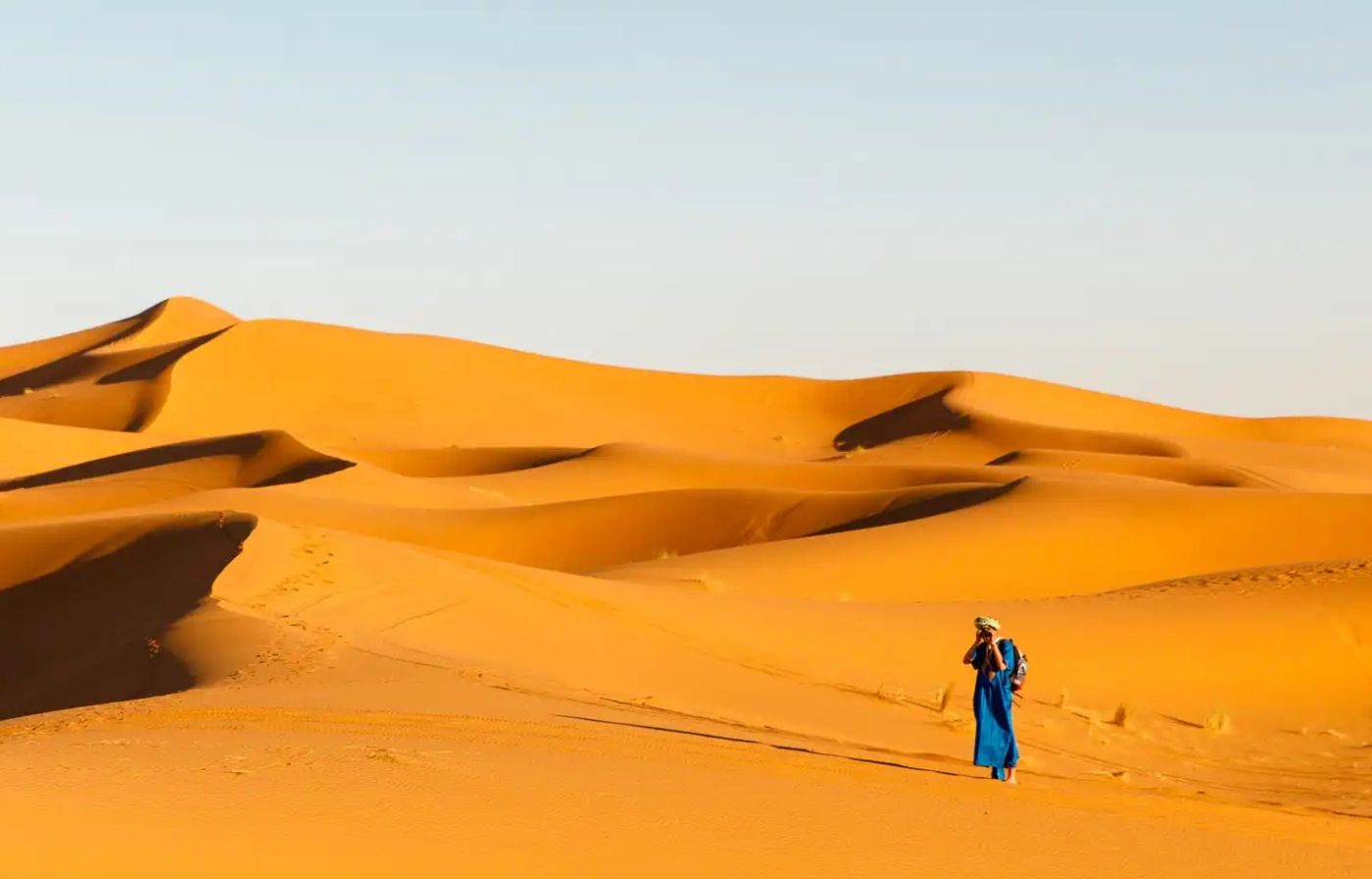
A Berber guide leads a camel caravan across the soft golden dunes of Erg Chebbi, with dramatic long shadows cast by the late-afternoon sun.
3. Choose the Right Camera Settings
If you’re using a DSLR or mirrorless camera:
- Aperture: f/8 – f/11 for landscapes
- ISO: Keep it low (100–200) to avoid noise
- Shutter speed: Adjust based on light conditions
- White balance: Try “Daylight” or adjust manually for warmer tones
For smartphones, activate HDR mode and manually control exposure for better results.
4. Protect Your Gear from Sand and Heat
The desert environment can be tough on equipment.
Essential precautions:
- Use a protective camera bag
- Avoid changing lenses in windy conditions
- Carry a microfiber cloth for sand and dust
- Keep gear shaded when not in use
A little care will go a long way in keeping your equipment safe.
5. Capture People to Tell a Story
Adding people brings life and scale to desert images.
Great subjects include:
- Camel trekking silhouettes
- Berber guides in traditional clothing
- Nomads walking across the dunes
- Musicians around a desert campfire
Always ask for permission before photographing people, especially in Berber communities.
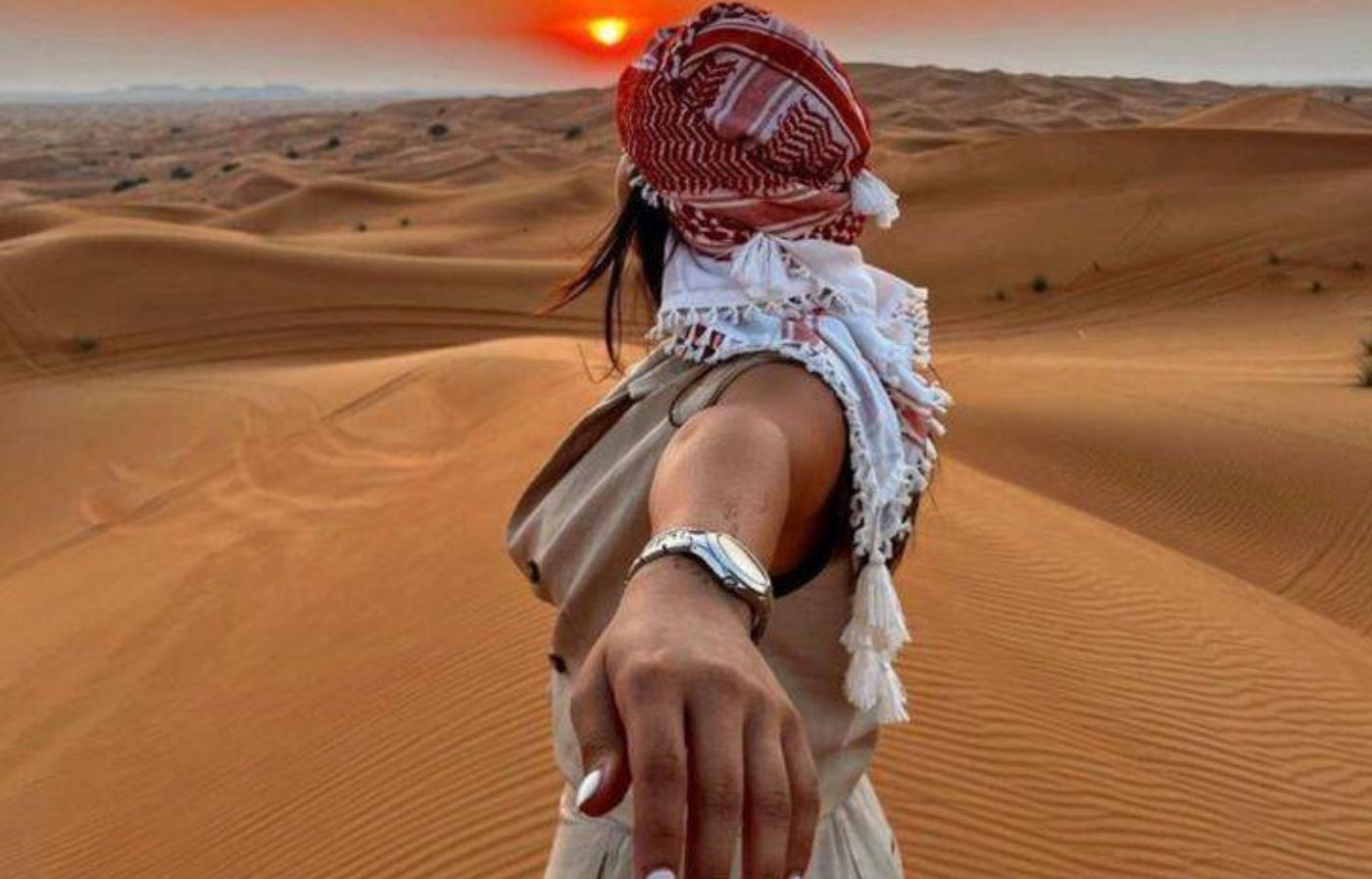
A magical Sahara Desert sunset in Merzouga, Morocco, capturing a unique travel experience among golden dunes.
6. Play with Minimalism and Space
The Sahara is perfect for minimalist photography.
Try:
- A single camel against endless dunes
- One person standing on a dune ridge
- Shadows and footprints in the sand
Less is often more in desert photography.
7. Master Sunset and Sunrise Silhouettes
Silhouettes are among the most iconic desert images.
How to do it:
- Position your subject between you and the sun
- Expose for the sky, not the subject
- Use camels, dunes, or people as strong shapes
These moments are brief, so be ready.
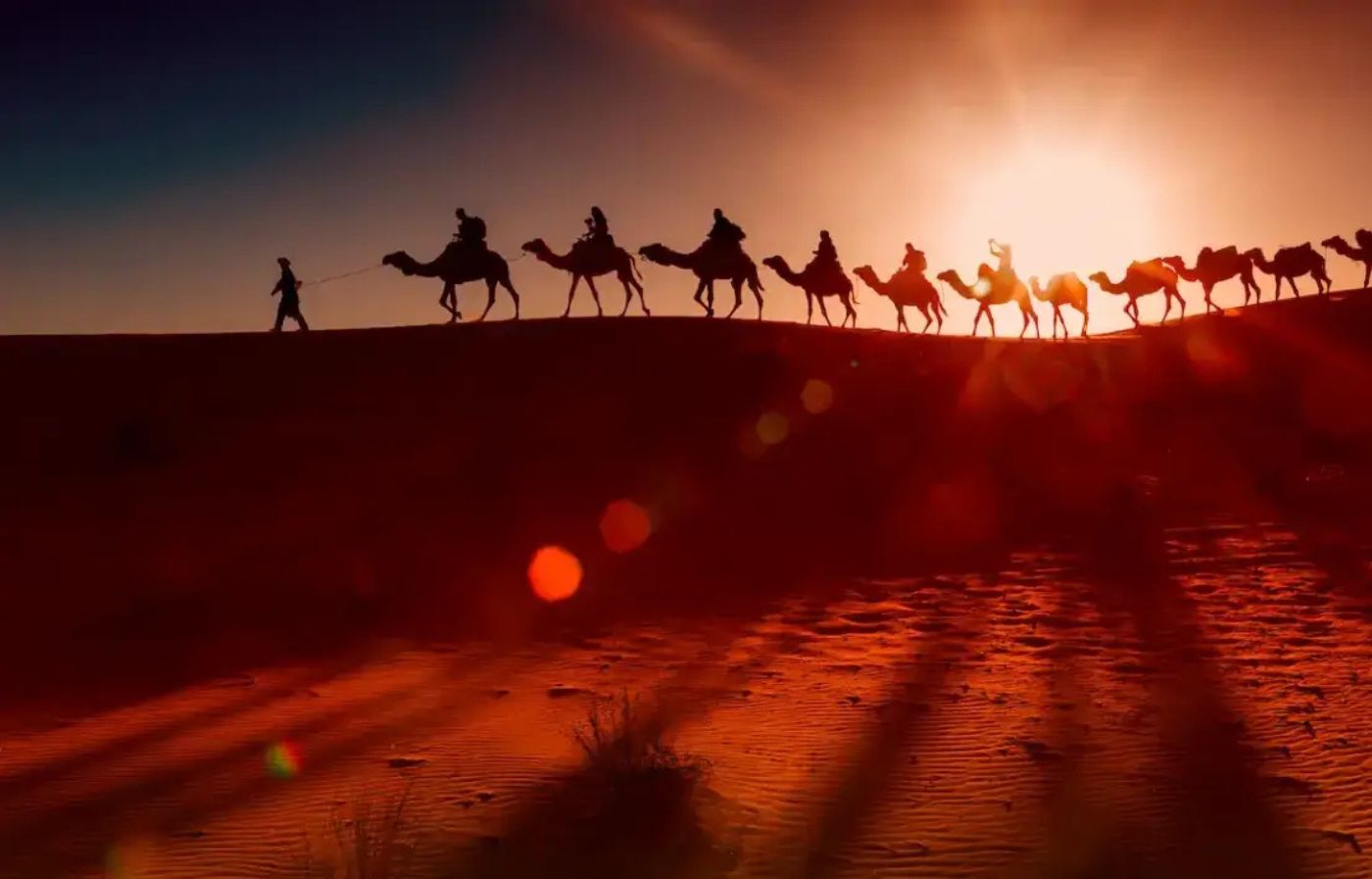
A beautiful silhouette of a camel caravan trekking across the Sahara dunes during a fiery sunset in Merzouga, Erg Chebbi, and Chegaga.
8. Try Night and Star Photography
The Sahara has almost zero light pollution, making it ideal for night photography.
Tips for astrophotography:
- Use a tripod
- Wide aperture (f/2.8 or lower if possible)
- ISO 1600–3200
- Long exposure (15–25 seconds)
Photographing the Milky Way above desert camps creates unforgettable images.
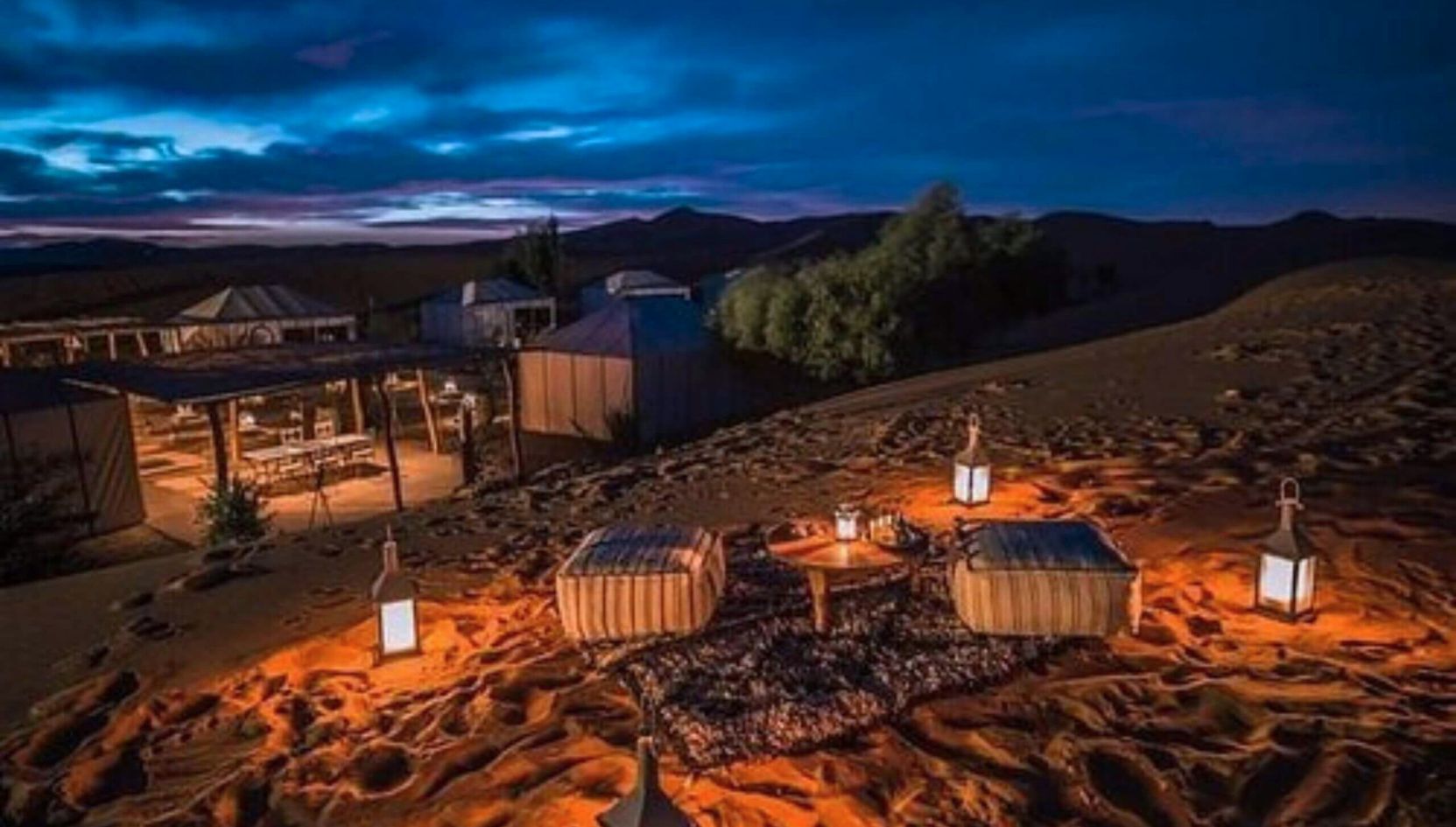
Magical night view of the Merzouga Luxury Desert Camp illuminated by lanterns under the starlit Sahara sky.
9. Move Around and Change Perspectives
Don’t stay in one place.
- Climb dunes for higher viewpoints
- Get low for dramatic foregrounds
- Walk around your subject and explore angles
The desert changes with every step.
10. Let the Experience Guide You
Some of the best desert photos happen when you slow down and observe. Watch how the light moves, how the sand changes color, and how silence shapes the atmosphere.
The Sahara rewards patience.
Final Thoughts
Photography in the Sahara Desert is not just about technique — it’s about connection. The vastness, silence, and natural beauty create moments that deserve to be captured with care and respect.
Exploring the desert with experienced local guides allows you to reach the most scenic locations at the perfect times of day, making all the difference for photography lovers.
If capturing the true spirit of the Sahara is on your list, choosing the right journey can turn great photos into lifelong memories.
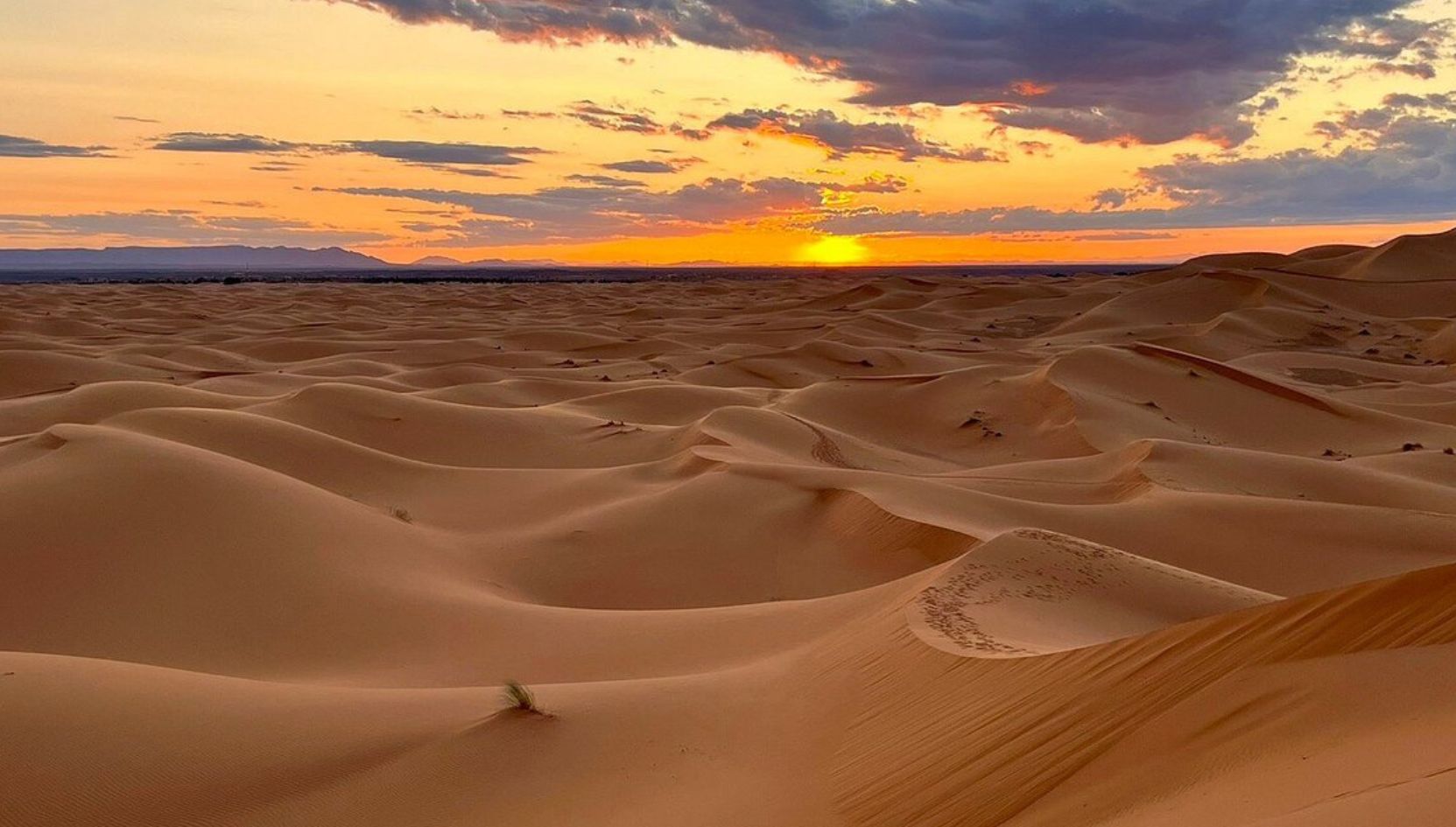
Golden dunes of Erg Chebbi glowing under the soft light of a Sahara sunset in Merzouga, Morocco.