The History Behind Nomadic Life in the Moroccan Sahara
Few cultures are as deeply connected to the desert as the nomadic tribes of the Moroccan Sahara. For centuries, these resilient communities have crossed the dunes, navigated ancient caravan routes, and preserved traditions that continue to fascinate travelers from around the world. Understanding the history of nomadic life offers a richer perspective on the Sahara and the people who call it home.
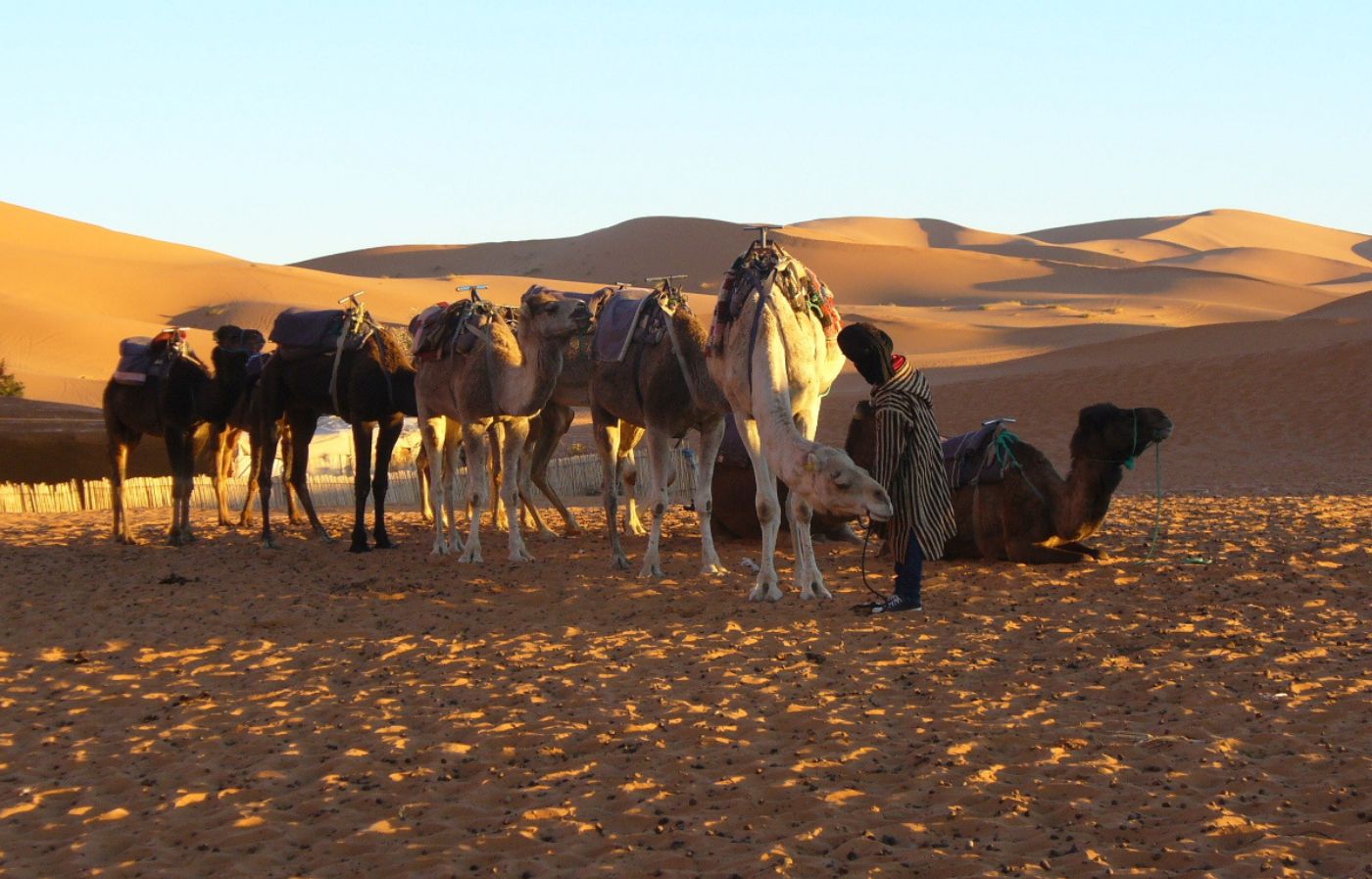
A traditional camel caravan resting among the golden dunes of the Moroccan Sahara.
Origins of Nomadic Tribes in the Moroccan Sahara
The earliest nomadic groups of the Sahara were Amazigh (Berber) tribes who adapted to the harsh environment through mobility, skillful resource management, and strong social bonds. Their lifestyle developed around:
-
Seasonal movement across desert paths
-
Herding camels, goats, and sheep
-
Caravan trading between North Africa and sub-Saharan regions
Over time, these tribes became masters of desert survival, mapping safe routes, oases, and changing landscapes long before modern navigation existed.
Caravan Trade: The Heart of Nomadic Life
From the 7th century onward, Saharan nomads played a crucial role in the trans-Saharan trade routes connecting Morocco to West Africa. Caravans sometimes included hundreds of camels, transporting:
-
Salt
-
Gold
-
Textiles
-
Spices
-
Incense
Nomads acted as guides, traders, and protectors of these routes. Their knowledge of the desert made long-distance trade possible, boosting the economic and cultural exchange across continents.
Survival Skills Passed Down Through Generations
Life in the Sahara requires deep knowledge of nature. Nomads developed unique desert survival practices, such as:
-
Reading the stars for navigation
-
Finding underground water sources
-
Predicting sandstorms
-
Traveling during cooler hours
-
Using camels as transport, food, and protection
These skills remain alive today, shared proudly by nomadic families who welcome visitors into their camps.
Traditional Nomadic Homes: Tents and Desert Camps
Nomadic tents — known as “khaimas” — are made from handwoven wool or goat hair, designed to withstand intense heat, cold nights, and strong winds. Families could dismantle and move them easily as they followed seasonal grazing patterns.
Today, many nomads still maintain seasonal mobility, while others have settled in small villages near Merzouga, Alnif, Tafraoute Sidi Ali, and Zagora, preserving their traditions while embracing modern needs.
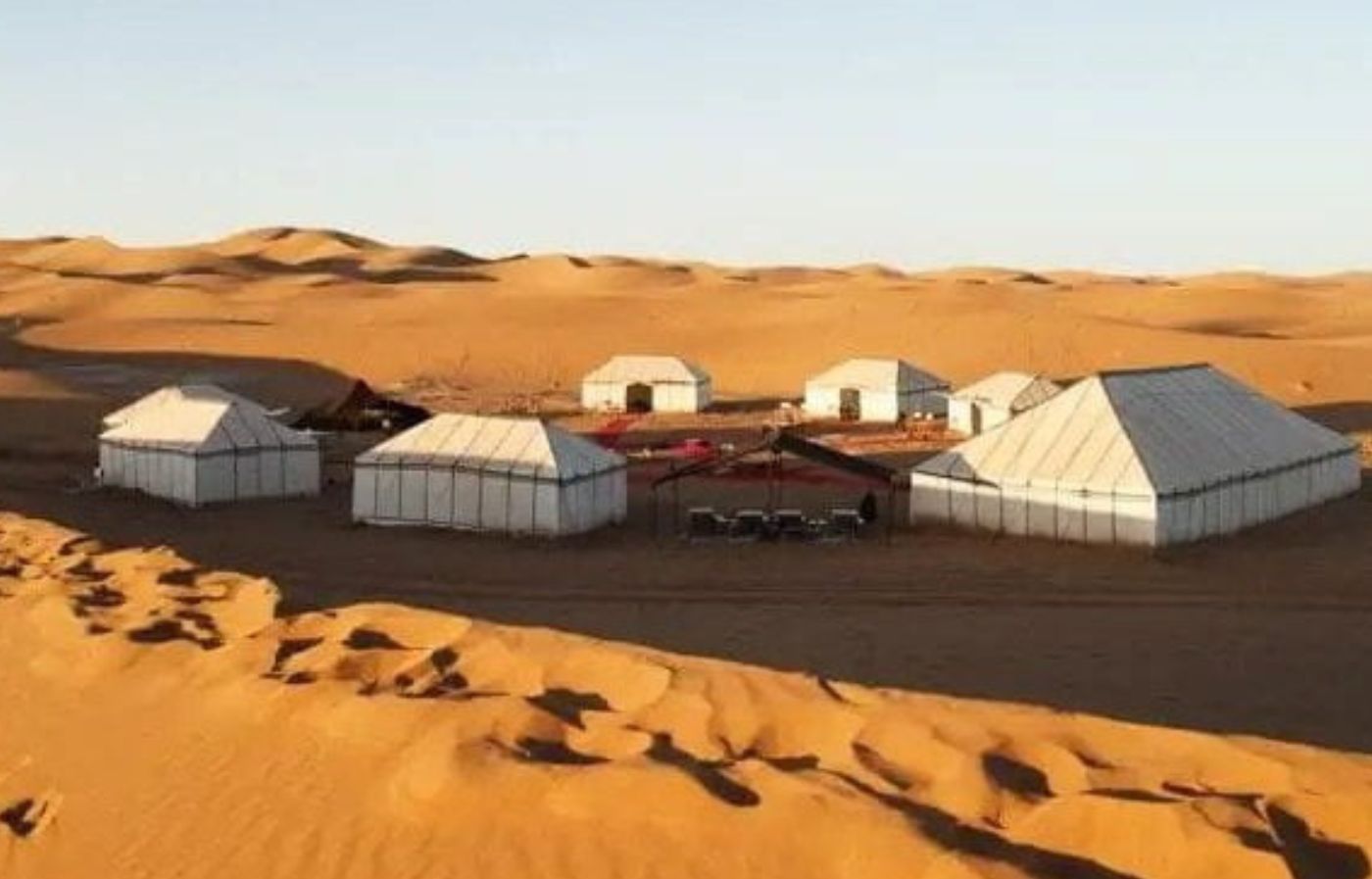
A traditional luxury desert camp nestled between the golden dunes of Merzouga, offering an authentic Sahara experience.
Spirituality and Social Traditions
Nomads are known for their strong community ties. Hospitality is sacred — offering tea to travelers, sharing meals, and welcoming strangers is part of their identity. Music, storytelling, and poetry play a central role in preserving history and strengthening family connections.
The Modern Nomadic Lifestyle
Although modern life has transformed desert living, many families continue to practice a semi-nomadic lifestyle. Some work as:
-
Camel handlers
-
Desert guides
-
Artisans
-
Hosts in Sahara camps
They share their heritage with travelers, allowing visitors to experience authentic desert traditions.
Why Understanding Nomadic History Enriches Your Sahara Journey
Exploring the Moroccan Sahara becomes even more meaningful when you understand the people who shaped it. Nomads are the guardians of ancient desert routes, keepers of oral history, and symbols of resilience and freedom.
Their stories deepen every camel trek, sunrise over the dunes, and night spent under the stars.

Camels resting peacefully in the vast golden dunes of the Moroccan Sahara.
A Subtle Invitation to Experience the Sahara
For travelers seeking a deeper cultural connection, joining a guided desert experience allows you to meet nomadic families, learn about their traditions, and witness the landscapes that have shaped their way of life for centuries.
A journey through the desert becomes more than sightseeing — it becomes a window into Morocco’s living heritage.