
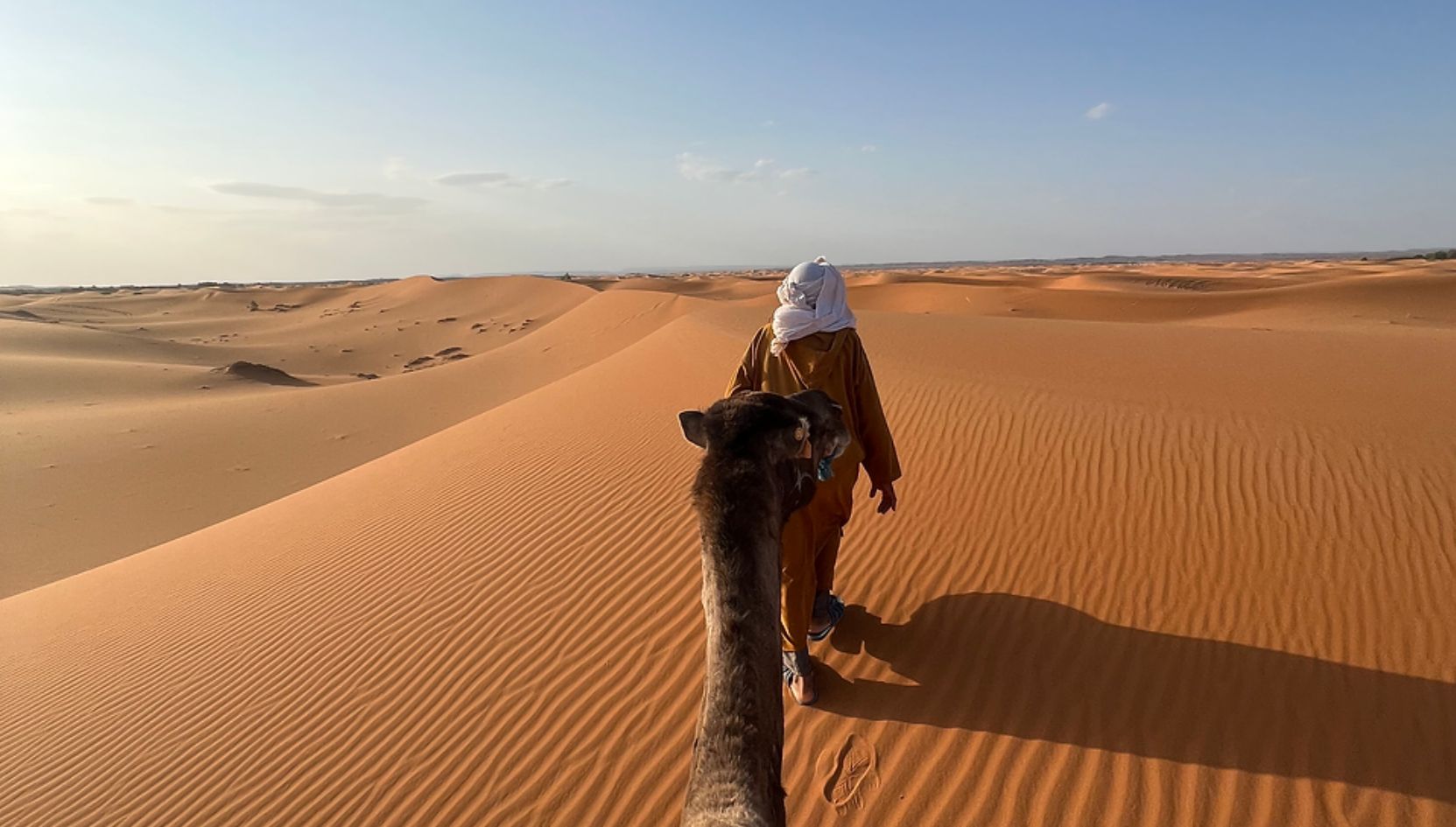
The History Behind Nomadic Life in the Moroccan Sahara
Nomadic tribes have shaped life in the Moroccan Sahara for thousands of years. Their traditions, resilience, and deep connection to nature form a living heritage that continues to fascinate travelers from around the world. Whether you encounter nomads near Merzouga, Zagora, or the remote dunes of Chegaga, their way of life reveals a powerful story of adaptability and cultural identity.
Understanding the history of these communities allows you to appreciate not only the beauty of the desert, but also the people who have thrived within it for generations.

A breathtaking view of the golden dunes of Erg Chebbi illuminated by the warm sunset in Merzouga, Morocco.
Origins of Nomadic Life in the Moroccan Sahara
Nomadic culture in Morocco stretches back more than 5,000 years, beginning with early Amazigh (Berber) tribes who moved across North Africa long before recorded history. Their seasonal migrations were shaped by the need for:
-
Water and grazing land
-
Protection from extreme heat
-
Secure trade routes across the Sahara
Their deep knowledge of the landscape made them essential guides and traders in one of the world’s most challenging environments.
Amazigh Heritage and Cultural Identity
Most of Morocco’s nomads belong to Amazigh communities whose identity is reflected through:
-
Traditional languages such as Tamazight, Tachelhit, and Hassaniya
-
Storytelling, music, and poetry passed from generation to generation
-
Distinctive craftsmanship: carpets, silver jewelry, pottery
-
Strong values of hospitality and community
These traditions form a cultural treasure that continues to define life in the Sahara today.
The Role of Nomads in Trans-Saharan Trade
For centuries, nomads guided merchant caravans carrying:
-
Gold
-
Salt
-
Spices
-
Textiles
Cities like Sijilmassa, Timbuktu, and Ouarzazate prospered thanks to their expertise. Their knowledge of hidden routes, oases, and weather patterns was invaluable in a desert landscape where survival depended on experience.
Daily Life in the Desert
Traditional nomadic life focuses on simplicity, family, and resourcefulness. Each day includes:
-
Tending camels, goats, and sheep
-
Preparing simple meals over open fires
-
Gathering water and firewood
-
Setting up or packing the khaima, a durable goat-hair tent
Life in the Sahara may appear minimal, but it is rich in tradition and shaped by a strong connection to nature.
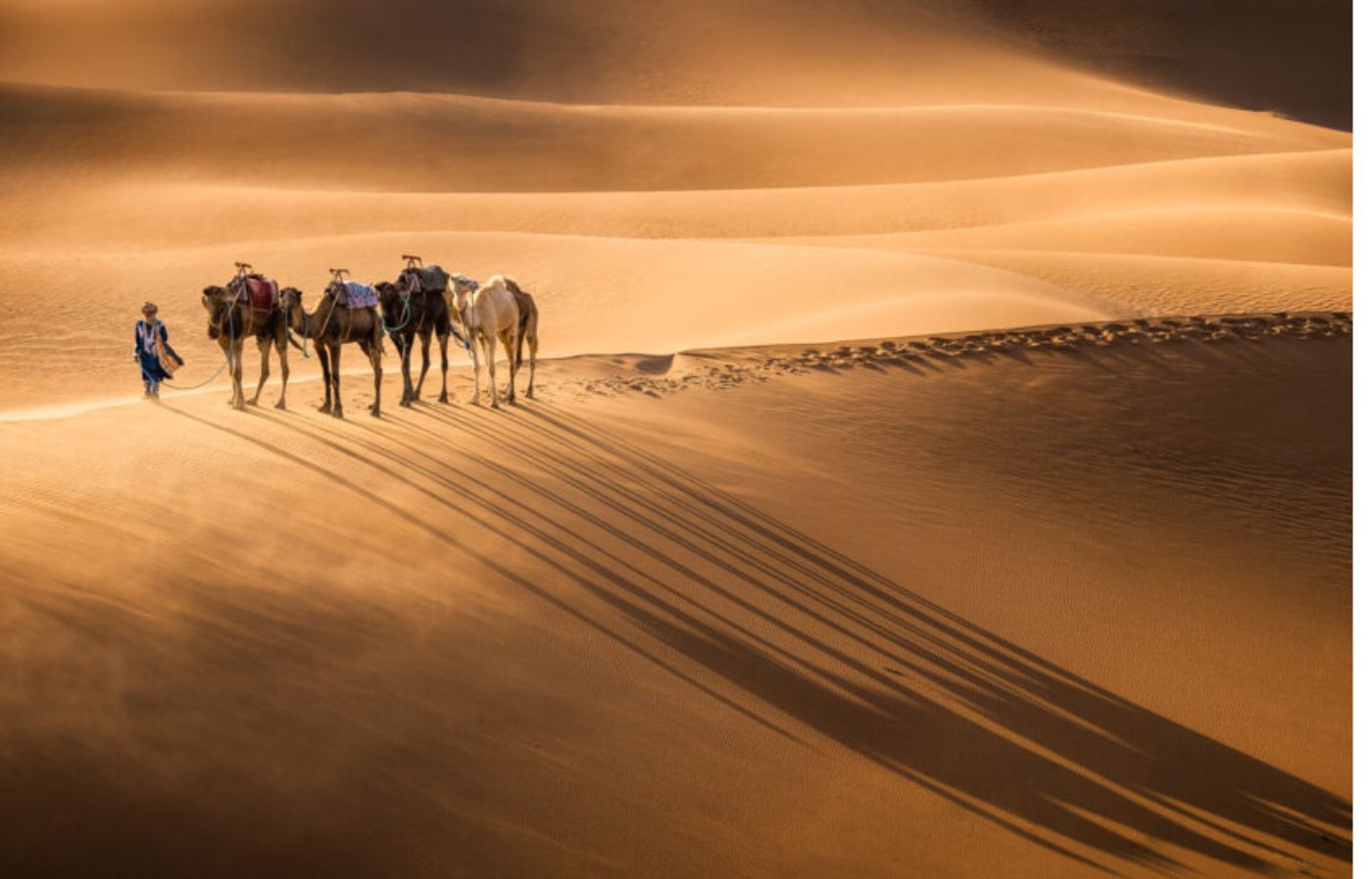
A Berber guide leads a camel caravan across the soft golden dunes of Erg Chebbi, with dramatic long shadows cast by the late-afternoon sun.
Seasonal Migration: Living With the Rhythm of the Desert
Nomads follow a migration pattern known as transhumance, relocating seasonally to ensure:
-
Fresh grazing land
-
Reliable water sources
-
Protection from harsh temperatures
This rhythm is one of the oldest surviving human traditions, reflecting a life fully aligned with the environment.
Challenges Facing Nomads Today
Modern life brings both opportunities and difficulties. Many nomadic families deal with:
-
Climate change and water scarcity
-
Shrinking pastures
-
Limited access to education and healthcare
-
Economic pressures pushing communities to settle
Even so, many families strive to maintain their traditional lifestyle while adapting where necessary.
Nomadic Life in the Modern Sahara
Today, many nomads blend tradition with modern tools such as:
-
Solar panels for electricity
-
Motorbikes for transportation
-
Mobile phones for communication
Some work in tourism, sharing their culture through camel treks, storytelling, and hosting travelers in desert camps.
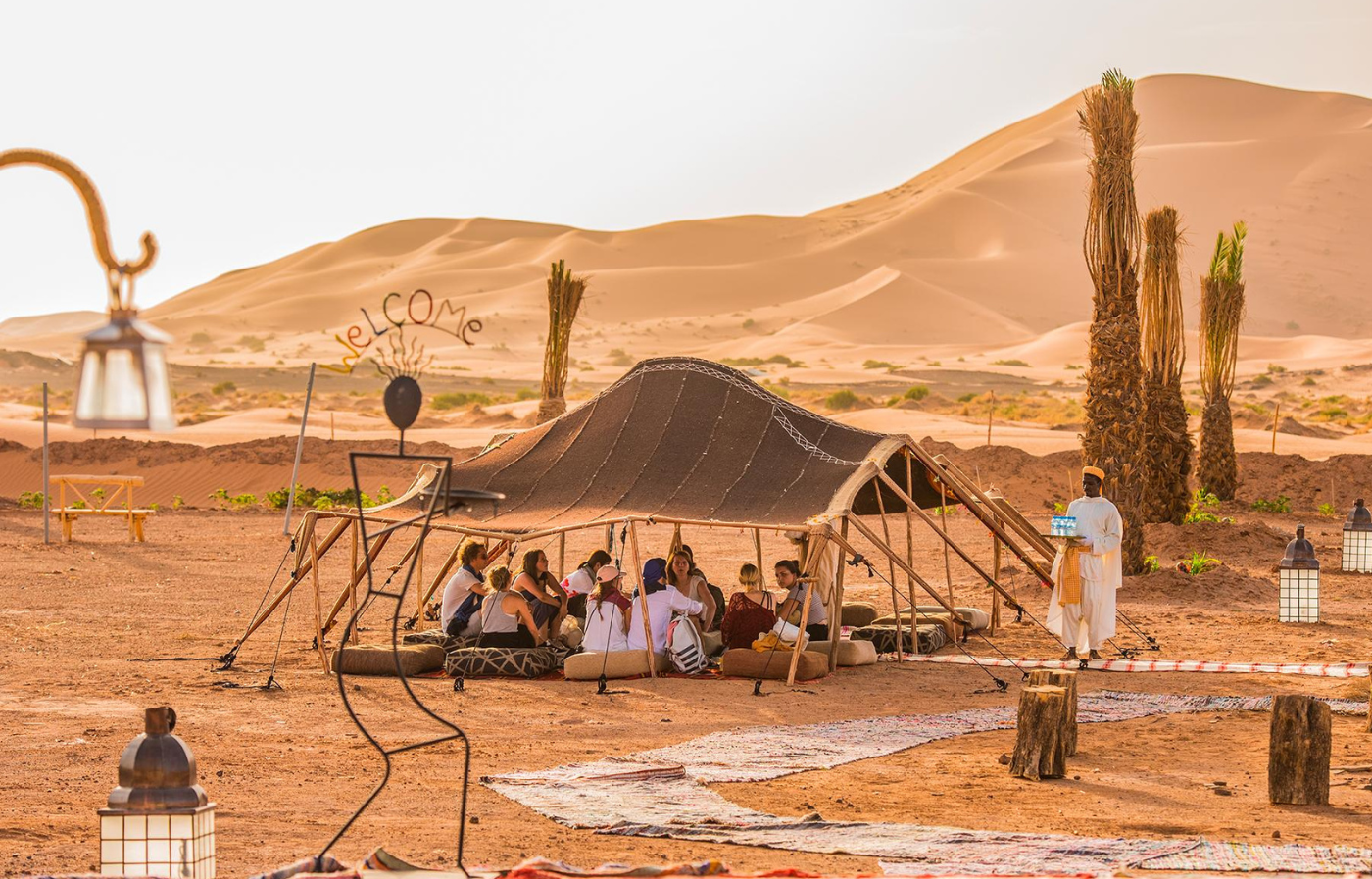
Travelers relaxing under a traditional Berber tent at a Sahara desert camp in Merzouga, surrounded by golden dunes.
Why Understanding This History Matters
Learning about Sahara nomads helps travelers:
-
Connect more deeply with the culture
-
Show respect when visiting nomadic families
-
Support sustainable, community-focused tourism
-
Appreciate the resilience and wisdom behind this ancient way of life
The desert is more than dunes — it is home to generations of people whose heritage deserves recognition.
Final Thoughts
The history of nomadic life in the Moroccan Sahara is a story of endurance, freedom, and profound connection to the land. Meeting nomadic families or simply witnessing their lifestyle offers a rare insight into Morocco’s cultural soul. With respect and curiosity, travelers can experience moments that stay with them long after they leave the desert.
A Gentle Note for Travelers
If you’re planning to explore nomadic regions, join camel treks, or discover the hidden paths of the Sahara, traveling with a knowledgeable local team can enrich the experience. Many visitors find that having guides who understand nomadic traditions, landscapes, and desert routes allows them to connect more meaningfully with the culture while ensuring safe and smooth travel across the dunes.
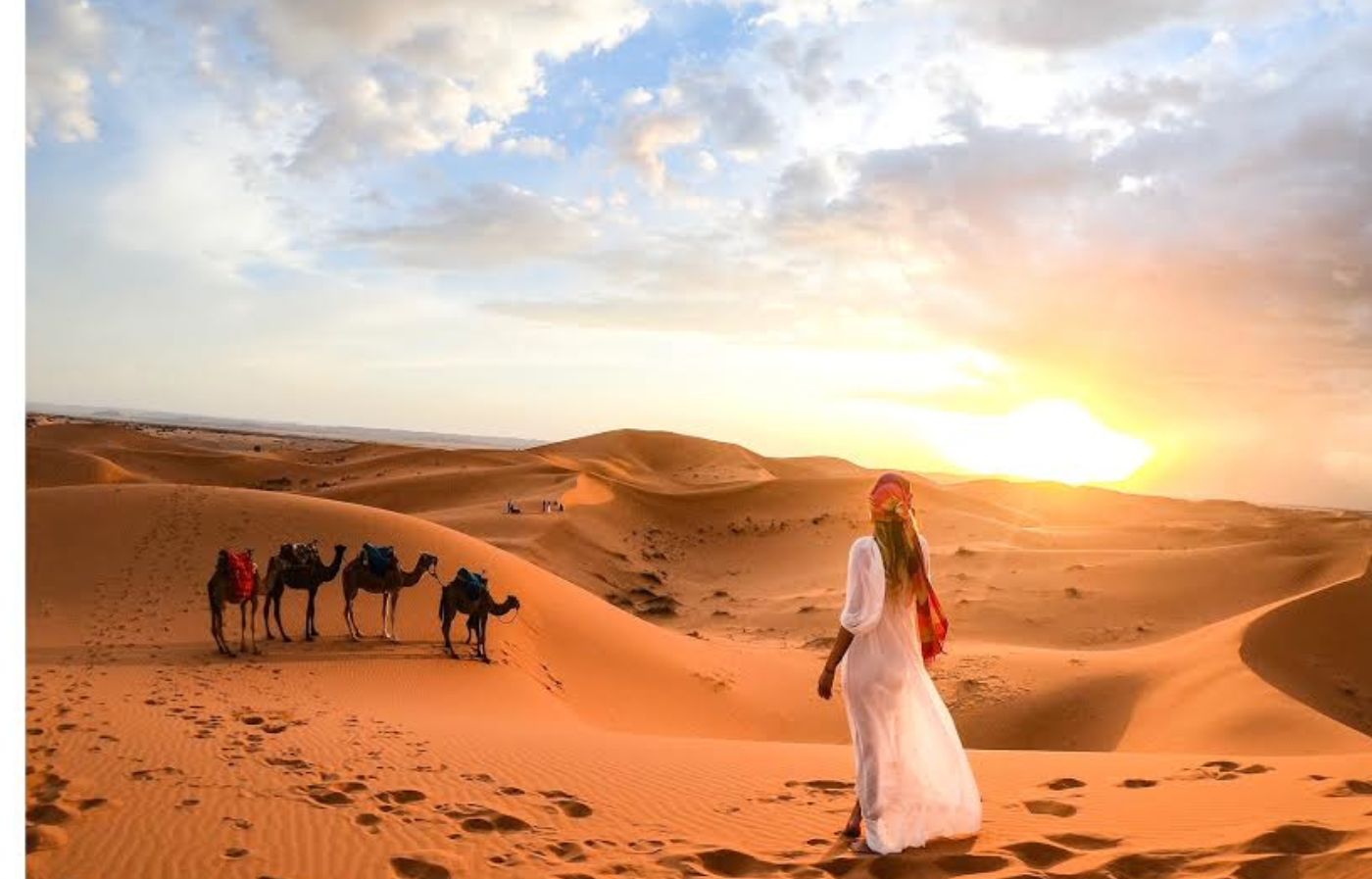
A traveler enjoying a breathtaking sunset over the golden dunes of Merzouga, with camels waiting for a Sahara adventure.