

Cultural Etiquette: What You Should Know Before Visiting Berber Villages
Visiting Berber villages in Morocco is one of the most authentic and enriching experiences a traveler can enjoy. These communities, rooted in centuries-old traditions, are known for their hospitality, simplicity, and deep connection to nature and family life. To ensure your visit is respectful and meaningful, it’s important to understand the cultural etiquette that guides daily life in Amazigh (Berber) regions.
This guide will help you navigate local customs with confidence and appreciation.
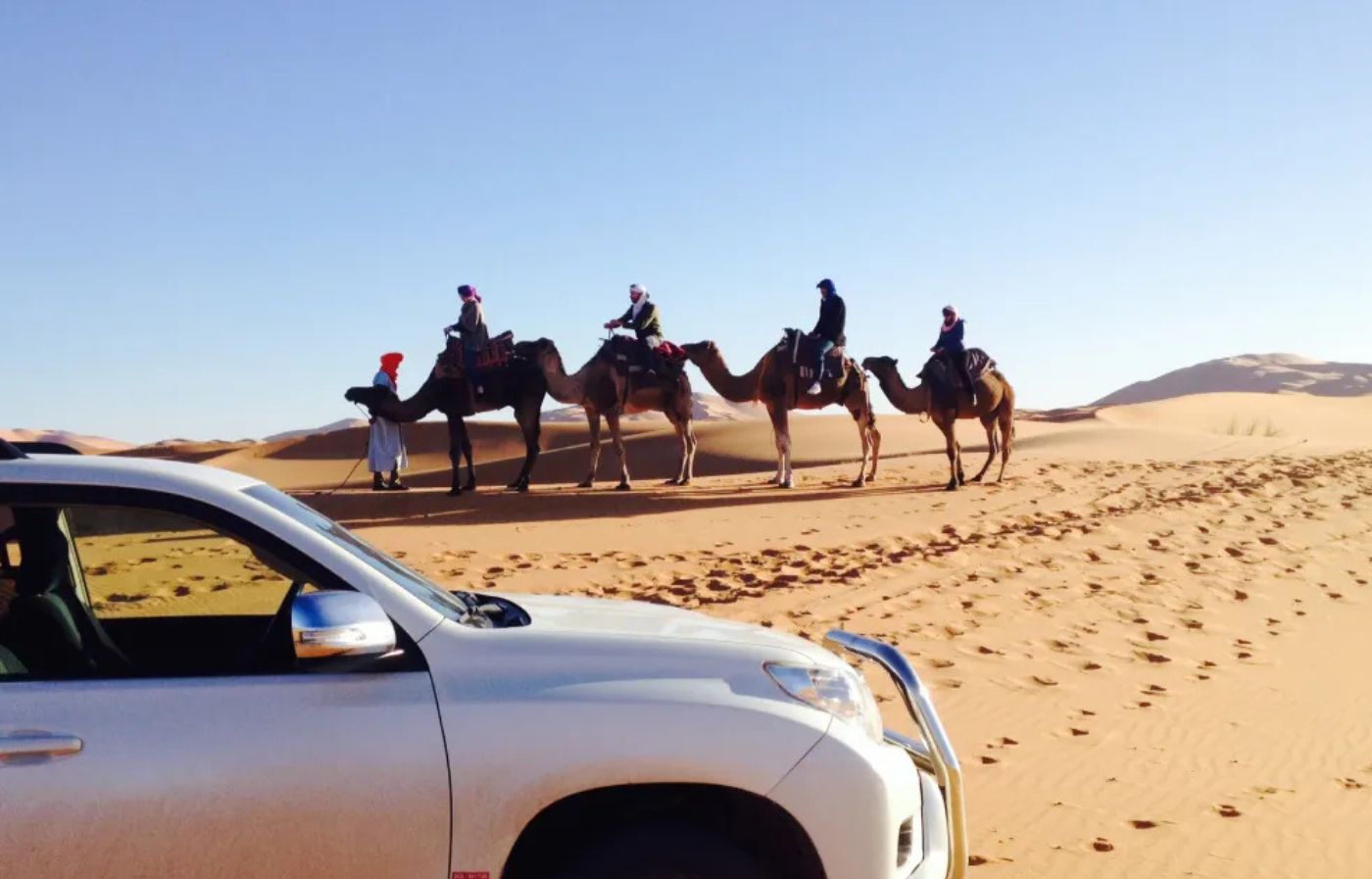
A combined camel trek and 4×4 experience across the golden dunes of Merzouga in Morocco.
1. Respect Local Hospitality
Berber people are known for their warm and generous hospitality. It’s common for families to welcome travelers with tea, snacks, or even a full meal.
Important etiquette:
- Accepting tea is a sign of respect.
- Avoid refusing hospitality unless you have a genuine reason.
- Take your time — rushing is considered impolite.
2. Dress Modestly in Rural Areas
While Moroccan cities are more relaxed, Berber villages follow traditional values.
Recommended clothing:
- Shoulders and knees covered
- Loose, comfortable items
- Avoid overly revealing clothes
Dressing modestly shows cultural awareness and is especially important when entering family homes.
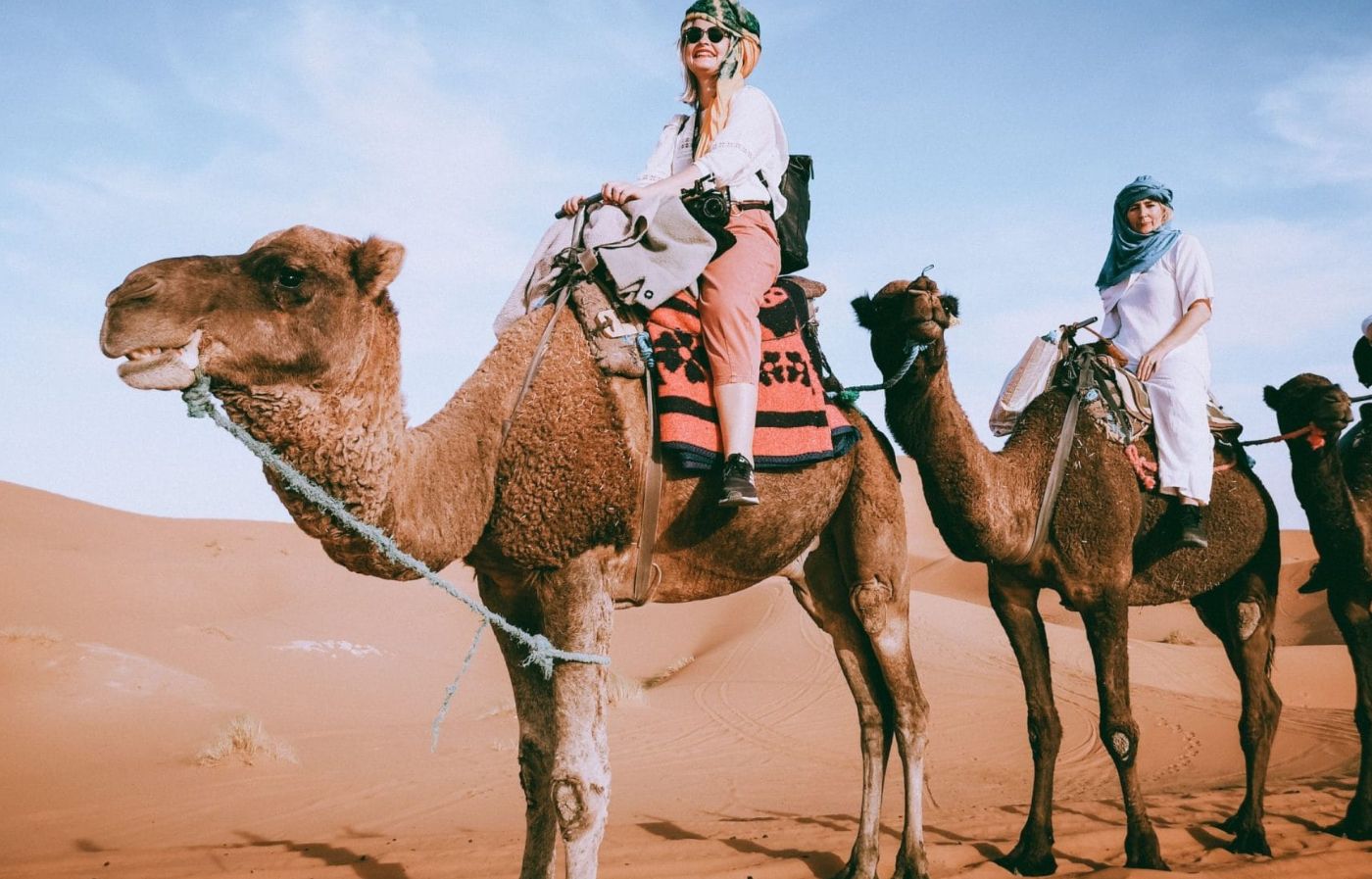
Visitors experiencing a traditional camel ride across the dunes of Merzouga in the Erg Chebbi desert.
3. Ask Permission Before Taking Photos
Berber communities value privacy, and taking photos without consent is considered disrespectful.
Always ask permission before photographing:
- People
- Homes
- Children
- Personal spaces
Most locals will kindly agree if you ask first.
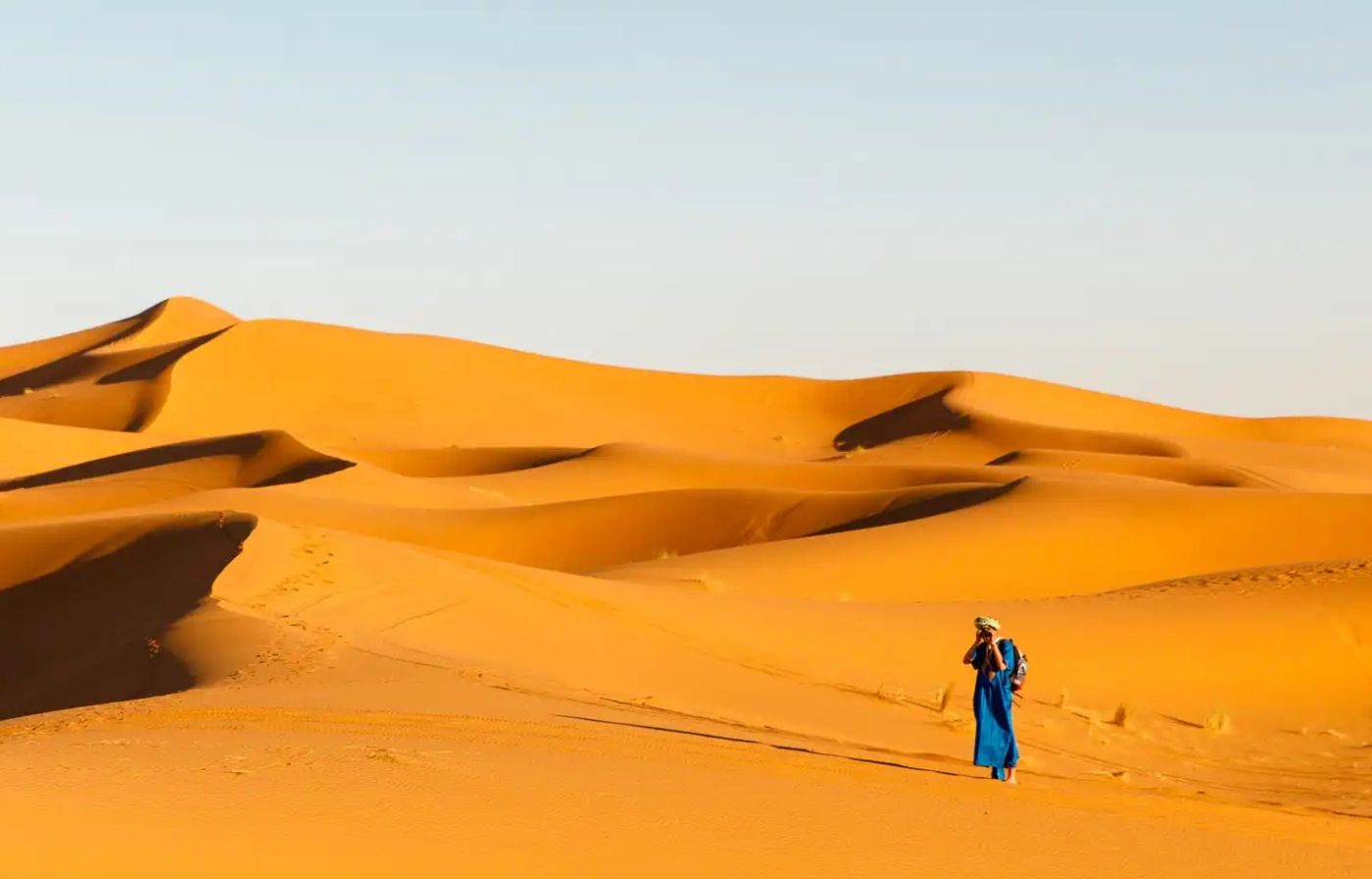
A Berber man crosses the golden dunes of the Merzouga Sahara, surrounded by vast desert landscapes.
4. Learn a Few Amazigh or Moroccan Arabic Words
Even a few simple phrases create an immediate connection.
Useful words:
- Azul (Amazigh) – Hello
- Saha – Thank you
- La bas? – How are you?
- Bslama – Goodbye
Locals genuinely appreciate the effort.
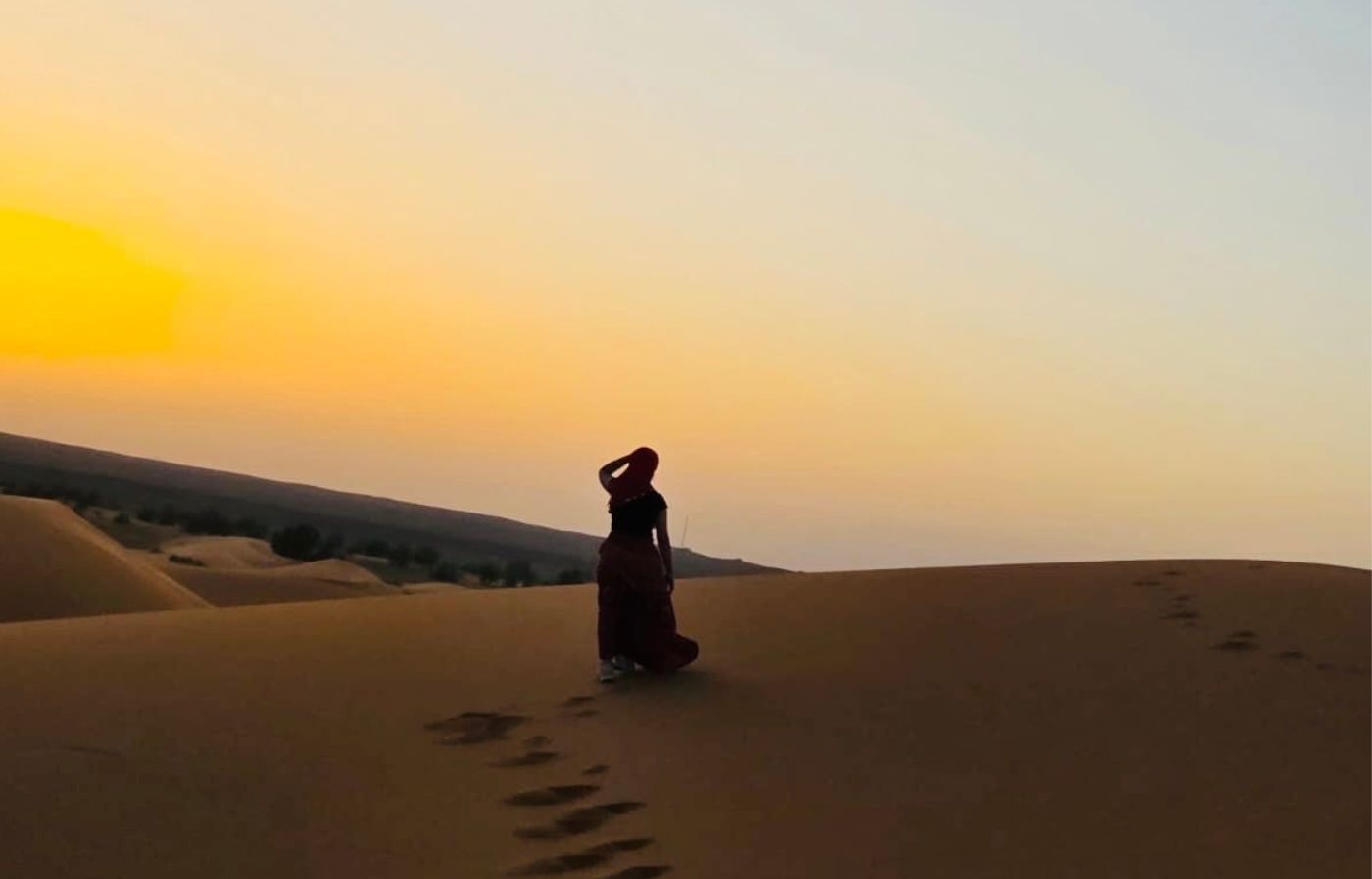
A woman walks across the Merzouga sand dunes during a peaceful sunset in the Sahara Desert.
5. Remove Shoes When Entering Homes
Many Berber families observe the custom of removing shoes at the door, especially in traditional mountain or desert homes.
If you see shoes at the entrance, follow the same practice.
6. Be Mindful During Meals
Dining customs in Berber villages are rooted in community and sharing.
Etiquette to follow:
- Wash hands before eating
- Eat with your right hand
- Avoid wasting food
- Compliment the meal — it’s appreciated
Meals are often enjoyed from a shared plate, reinforcing community bonds.
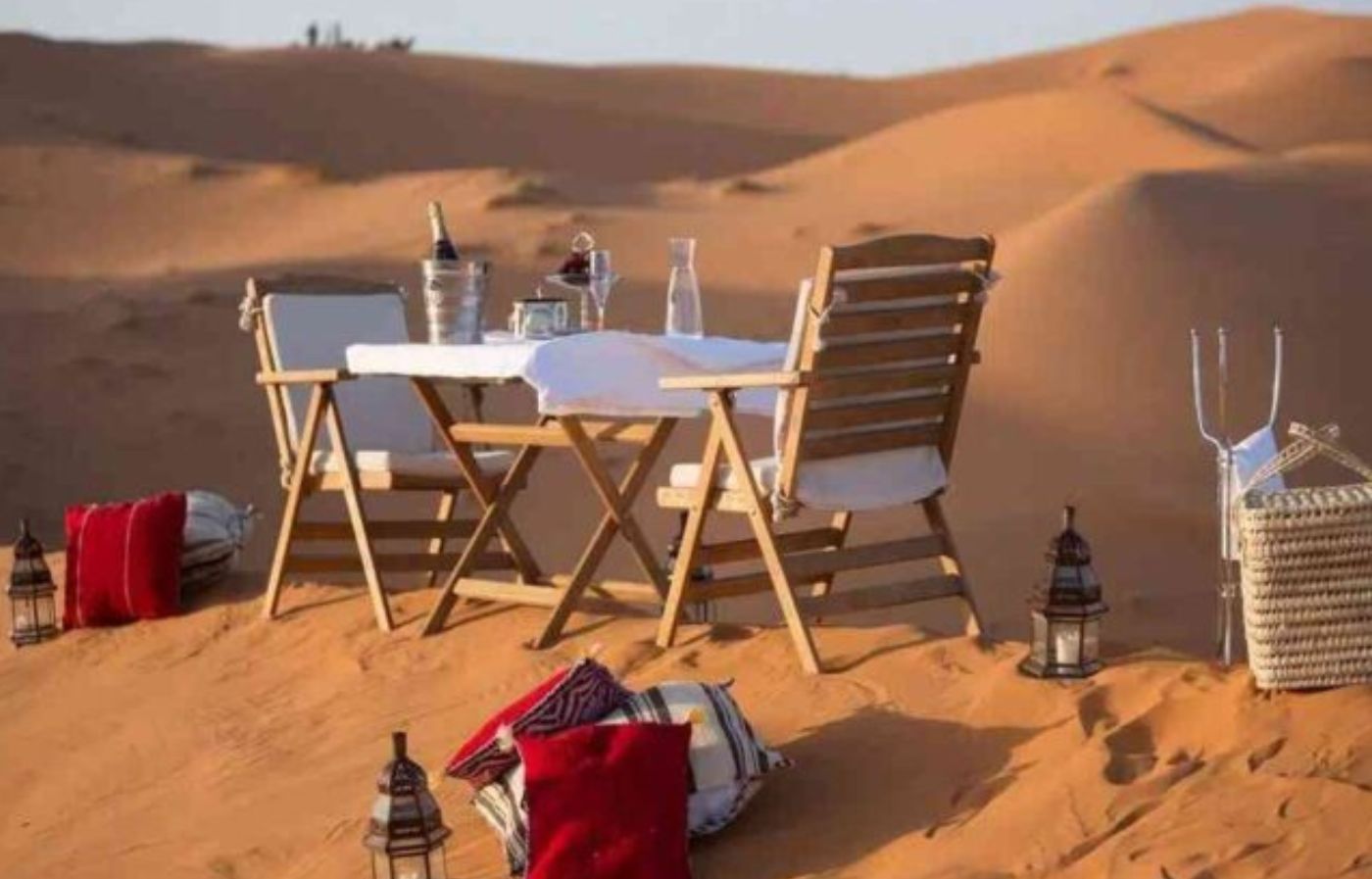
A beautifully arranged private dinner setup on the golden dunes of Merzouga, offering a unique and intimate Sahara experience.
7. Respect Religious Practices
Berber communities are predominantly Muslim, and religion plays a central role in daily life.
Be respectful of:
- Prayer times
- Ramadan fasting
- Holy spaces
Avoid loud conversations or walking in front of someone praying.
8. Support Local Handcrafts and Community Work
If you wish to buy souvenirs:
- Choose local cooperatives
- Buy handmade products such as carpets, pottery, or jewelry
- Avoid bargaining too aggressively — fairness matters more than low prices
Your purchase directly supports families and preserves Amazigh craftsmanship.
9. Show Genuine Curiosity — With Humility
Berber people enjoy sharing their culture, but always be humble and open-minded. Avoid comparing lifestyles or viewing traditions through a Western lens.
Ask questions respectfully, listen attentively, and appreciate the richness of their heritage.
Final Thoughts
Visiting a Berber village is a unique opportunity to connect with Morocco’s authentic cultural roots. With the right etiquette, your experience becomes more meaningful — not just for you, but for the communities who welcome you.
A little respect goes a long way, and the memories you create will last a lifetime.